

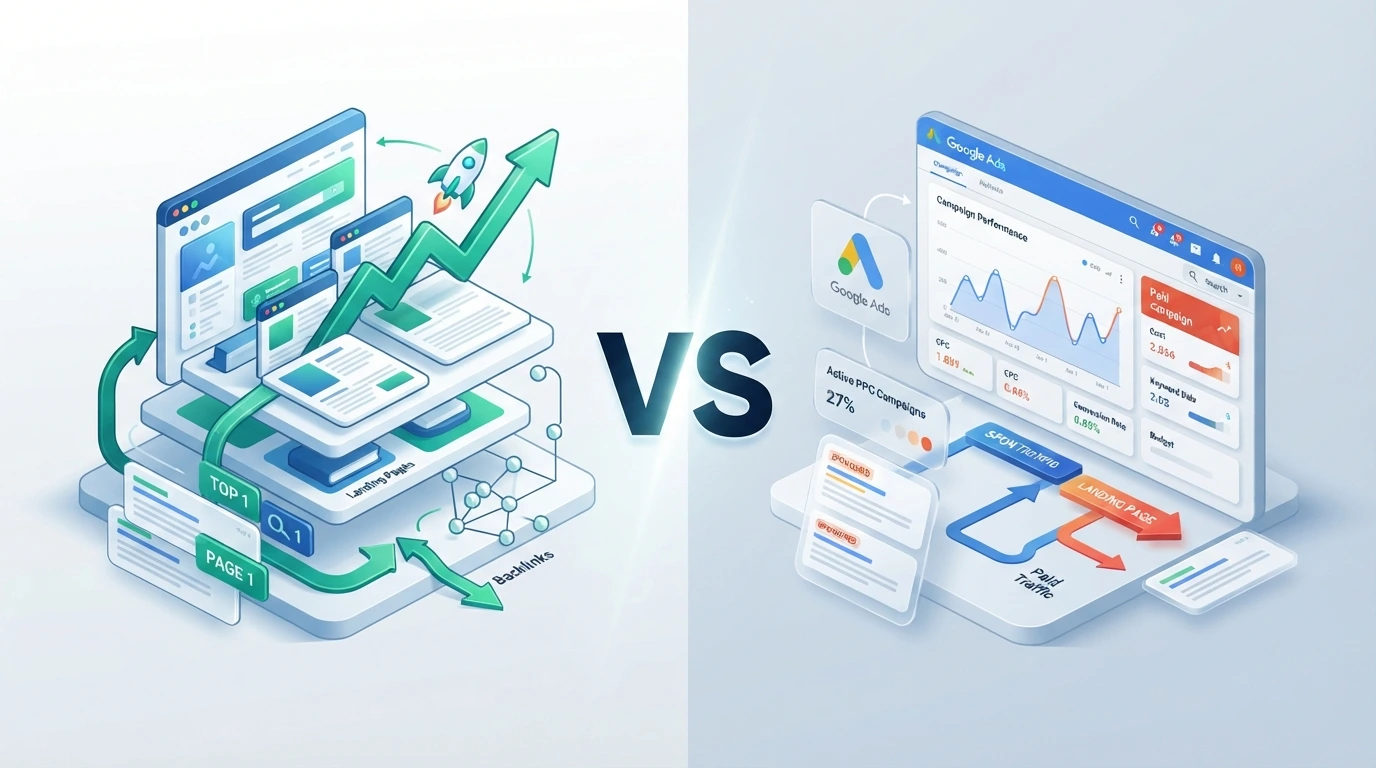
SEO vs paid ads is the core decision behind every digital marketing budget. SEO builds free, long-term traffic through organic search rankings. Paid ads buy instant traffic through platforms like Google Ads and Meta Ads.
In this guide, you will learn:
- The 6 core differences between SEO and paid advertising
- Real 2026 cost and performance data
- A simple framework to pick the right strategy for your business
- When combining both channels works best
Table of Contents
What Is SEO?
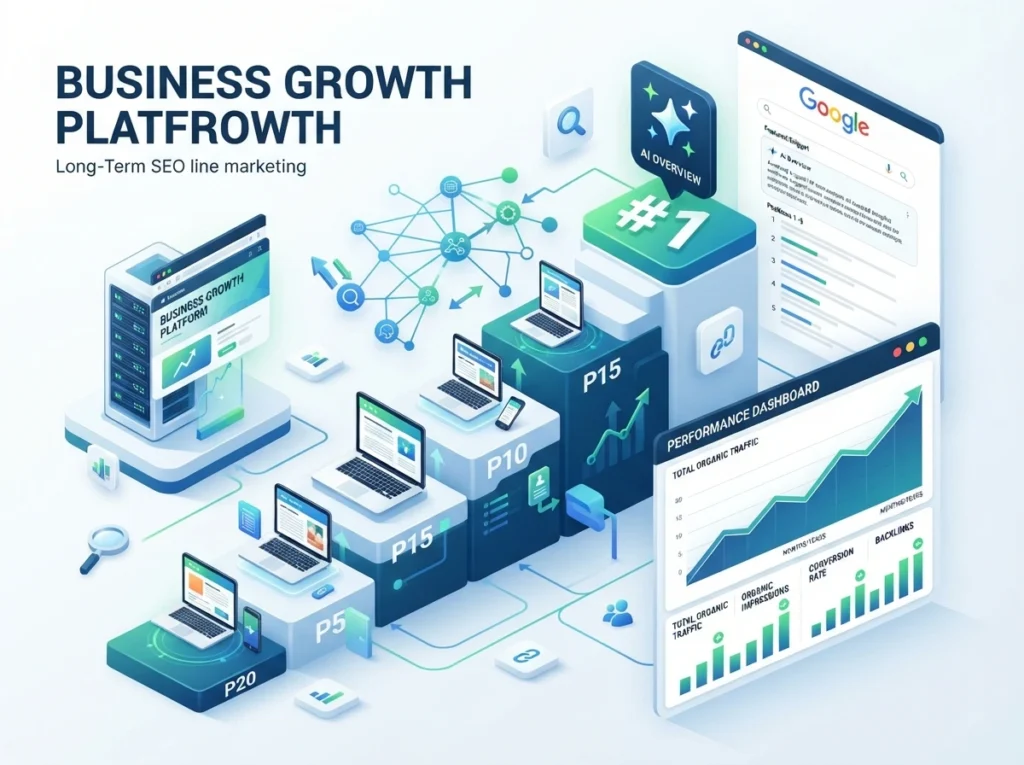
SEO stands for search engine optimization. It means improving a website so it ranks higher in unpaid, organic search results.
SEO rests on 3 main pillars:
- Technical optimization (site speed, mobile usability, crawlability)
- Content creation (pages that answer real search queries)
- Link building (other sites linking back to your pages)
How SEO Rankings Are Earned
Google ranks pages using hundreds of factors. These include page content, backlinks, site speed, and mobile experience.
Pages do not pay for placement. Rankings shift based on relevance and trust signals instead.
Why Top Search Position Still Drives the Most Clicks
Position matters more than almost any other ranking factor. According to First Page Sage’s 2026 report, the top 3 organic search results receive more than two-thirds of all clicks on a Google search page.
A featured snippet, which sits in the top spot, has the highest click-through rate of any search element at 42.9%.
The AI Overview Shift in 2026
AI Overviews are reshaping how organic clicks get distributed across the search page.
Research from Growth SRC found that click-through rates for position 1 dropped from 28% to 19% between 2024 and 2025. That is a 32% decline. At the same time, click-through rates for positions 6 through 10 rose by more than 30% in the same period.
This means a strong 2026 SEO strategy has to target 2 goals at once:
- Ranking in traditional organic positions
- Getting cited inside AI Overviews
What Is Paid Advertising (PPC)?
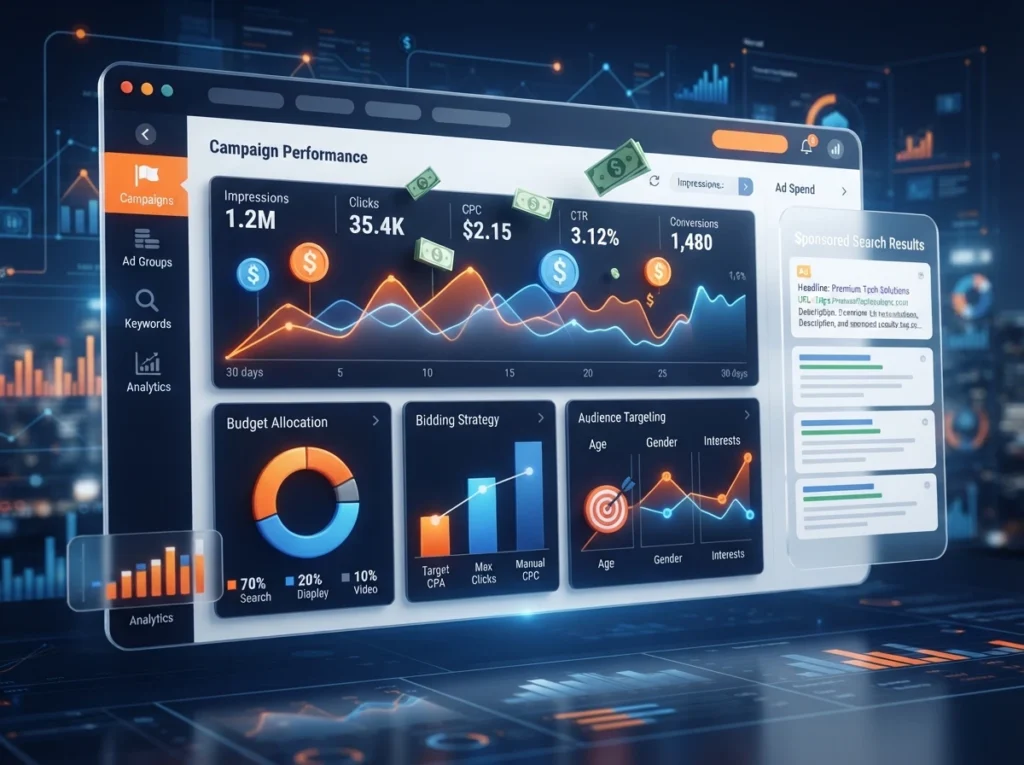
Paid advertising is often called PPC, short for pay per click. Advertisers pay a fee every time someone clicks their ad. Google Ads, Microsoft Ads, and Meta Ads all run on this auction-based model.
How the PPC Auction Works
Advertisers bid on keywords or audience segments. Google combines the bid amount with a Quality Score, which measures ad relevance and landing page experience.
That combination decides the final cost per click and the ad’s position on the page.
What Paid Ads Cost in 2026
Paid ad costs have climbed every year for the past 5 years.
According to WordStream’s 2026 Google Ads Benchmark Report, based on over 13,000 search campaigns, the average cost per click on Google Ads in 2026 is $5.42.
Costs vary a lot by industry. A few examples:
- Arts and entertainment sits near the low end
- Legal services often exceeds $8 per click
- Insurance regularly runs above $8 per click too
Paid Ads Deliver Traffic Immediately
Paid campaigns can generate clicks within hours of launch. There is no waiting period and no content buildup phase.
The budget spent today produces visitors today. If the campaign pauses, traffic stops the same day.
SEO vs Paid Ads: 6 Key Differences
The table below compares SEO and paid ads across the 6 factors that matter most when planning a budget.
Factor | Factor SEO Paid | Paid Ads |
|---|---|---|
|
Time to results |
4 to 12 months |
Same day |
|
Cost per click |
$0 after setup investment |
$2.69 to $5.42 average in 2026 |
|
Traffic longevity |
Continues after work stops |
Stops when budget stops |
|
Trust signal |
Higher perceived credibility |
Lower perceived credibility |
|
Scalability |
Limited by content and authority |
Scales instantly with budget |
|
Best for |
Long-term brand growth |
Time-sensitive campaigns and launches |
SEO Costs Less Per Click Over Time
SEO requires upfront investment in content, technical fixes, and links.
Once a page ranks, each additional visitor costs nothing extra. Paid ads charge for every single click, indefinitely, with no discount for repeat exposure.
Paid Ads Win on Speed
SEO usually takes 4 to 12 months to reach page one rankings for competitive terms. This estimate comes from industry benchmarks published by Ahrefs and Semrush.
Paid ads generate qualified traffic within hours of approval. Use paid ads if speed is the priority, such as for a product launch or a market test.
Trust and Click Behavior Differ
Users click organic results far more often than paid results. First Page Sage’s 2025 study found the number 1 organic result receives about 19 times more clicks than the top paid ad. Many users also see organic listings as more credible and less biased than sponsored placements.
When to Choose SEO
SEO fits businesses that want long-term, sustainable visibility without ongoing per-click spend.
Established Businesses With Time to Invest
Businesses with 6 or more months of runway before needing results benefit most from SEO.
Examples include:
- Law firms
- SaaS companies
- Healthcare providers
Content-Rich Industries
Industries with deep informational needs get 3 clear SEO advantages:
- Compounding traffic that grows month over month
- Stronger topical authority in the niche
- Lower dependency on ongoing ad spend
Finance, education, and healthcare brands all benefit from this pattern.
Budget Constrained Businesses
Startups and small businesses with limited ad budgets use SEO to reduce customer acquisition cost over time.
When to Choose Paid Ads
Paid ads fit businesses that need immediate, measurable, and controllable traffic.
Product Launches and Time-Sensitive Offers
New product launches, flash sales, and seasonal promotions need traffic before organic rankings can build. Paid ads deliver visibility instantly, especially when the campaign has a clear end date.
Highly Competitive, Low Content Niches
Some industries have thin content opportunities but high buying intent. Examples include:
- Local plumbing services
- Emergency HVAC repair
- Personal injury law
Paid ads capture these high-intent searches directly.
Precise Audience Targeting Needs
Platforms like Google Ads and Meta Ads support detailed targeting by:
- Location
- Device type
- Income bracket
- Specific interests
Businesses that need this precision, such as reaching first-time homebuyers in one city, move faster with paid campaigns than with SEO alone.
Can You Combine SEO and Paid Ads?
Yes. Combining SEO and paid ads produces stronger results than running either strategy alone. Most experienced search marketers split the budget across both channels instead of picking just one.
Use Paid Ads to Validate SEO Keywords
Run paid campaigns first to see which keywords actually convert. Search terms with strong PPC conversion rates become priority targets for long-term SEO content.
This approach reduces wasted content investment.
Dominate the Search Results Page
Ranking organically and running paid ads for the same query increases total visibility on the page. Google’s own research shows that combined organic and paid presence increases total click share compared to organic alone.

Bridge the SEO Ramp-Up Period
New websites take months to earn organic trust. Paid ads fill that traffic gap immediately. This generates revenue and useful data while SEO rankings build in the background.
FAQ
Is SEO better than paid ads?
SEO delivers a lower cost per click over time and builds lasting organic visibility. Paid ads deliver faster results and precise targeting. Neither option wins universally. The right choice depends on your timeline, budget, and how competitive your industry is.
How long does SEO take to show results?
SEO usually takes 4 to 12 months to reach page one rankings for competitive keywords. Long-tail, low-competition keywords can rank faster, sometimes within 4 to 8 weeks.
Is Google Ads worth it in 2026?
Google Ads is worth it for businesses that need immediate traffic, precise targeting, or fast campaign data. The average cost per click reached $5.42 in 2026, so profitability depends heavily on your conversion rate.
Do paid ads help SEO rankings?
Paid ads do not directly influence organic rankings. Google confirms ad spend is not a ranking factor. Paid campaigns do provide keyword performance data that can guide your SEO content strategy indirectly.
What percentage of clicks go to organic results vs paid ads?
Organic results receive the large majority of clicks on a typical search page. The top 3 organic results alone capture more than two-thirds of all clicks, while the top paid ad averages roughly a 2% click-through rate.
Should small businesses start with SEO or paid ads?
Small businesses with limited runway usually start with paid ads for immediate traffic. They then shift budget toward SEO as organic rankings build. Businesses with 6 or more months of runway can start SEO right away.
Can paid ads replace SEO entirely?
Paid ads only generate traffic while the budget stays active. SEO keeps generating visitors after a page is published. Businesses that pause paid campaigns lose traffic instantly, which makes SEO essential for long-term visibility.
What is the average cost per click for Google Ads?
The average cost per click across Google Ads in 2026 is $5.42, based on WordStream’s benchmark analysis of over 13,000 search campaigns. Costs range widely by industry, from under $2 to over $8 per click.
Conclusion
SEO vs paid ads is not a single winner-take-all decision. SEO builds compounding, low-cost organic traffic over 4 to 12 months. Paid ads deliver immediate, precisely targeted traffic at an average cost of $5.42 per click in 2026.
Three takeaways matter most:
- Organic results still capture the majority of search clicks
- Paid ads win on speed and targeting precision
- Combining both channels outperforms running either one alone
Businesses building long-term brand authority should prioritize SEO. Businesses needing fast, measurable traffic should start with paid ads, then layer SEO in over time.
Start by auditing your current site performance. Test 1 or 2 high-intent keywords across both channels to see which strategy fits your business goals.


